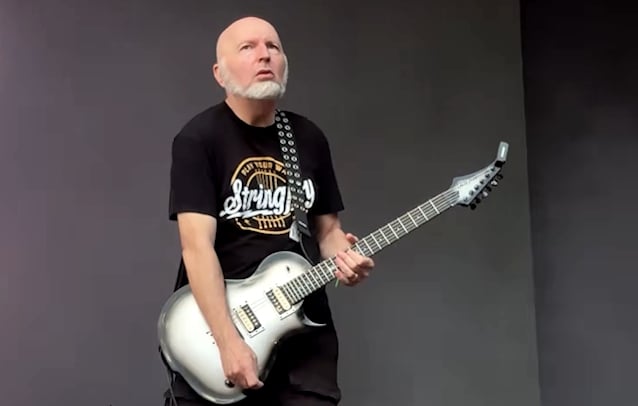
Guitarist Jack Owen has opened up about the creative struggles that colored his nine years in DEICIDE, admitting he found himself creatively blocked while trying to contribute to the death metal institution's sound.
Owen joined DEICIDE in 2004 and remained through 2013, appearing on four studio albums: "The Stench Of Redemption" (2006), "Till Death Do Us Part" (2008), "To Hell With God" (2011) and "In The Minds Of Evil" (2013), the last of which he co-wrote with guitarist Kevin Quirion.
Reflecting on the writing process, Owen described a creative shutdown rather than a gradual struggle: "Yeah, it kind of went from 0% to 100%... I was blocked by myself in Deicide." He offered some insight into why, characterizing the band's core sound as sitting outside his own instincts as a writer: "I always viewed them as kind of a Slayer-influenced band," he said, suggesting a stylistic mismatch made contributing original riffs and songs more difficult than fans might assume from the outside.
Owen was candid that the difficulty extended beyond the studio. "It was a rough time for me writing when I was in Deicide, and the lack of touring," he said, pointing to inactivity on the road as compounding his creative frustration during his tenure.
His exit from the band was similarly blunt. Rather than a formal announcement or drawn-out split, Owen has described simply cutting ties: "I literally walked out and ghosted them." He resurfaced in 2017 as a member of SIX FEET UNDER, reuniting with former CANNIBAL CORPSE bandmate Chris Barnes, and has remained active there since.
The comments, given in a new interview with Chaoszine, offer a rare, unfiltered look at the internal friction behind a catalog widely regarded as one of DEICIDE's stronger creative periods — a reminder that even celebrated studio-era lineups can mask real behind-the-scenes tension.