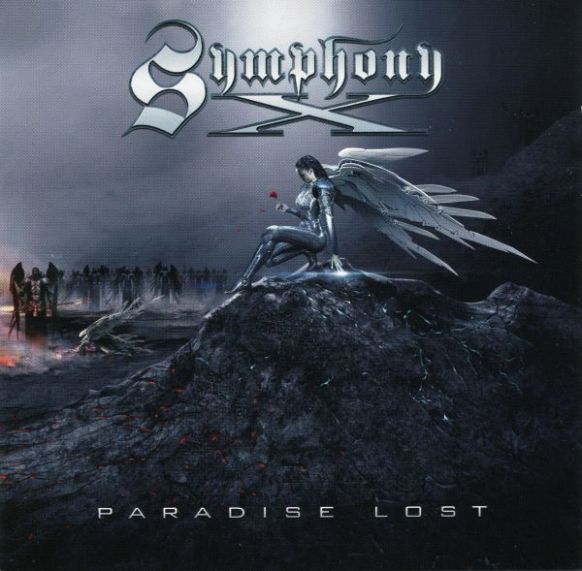
This well-known American prog-power band released its first album in 1994, and by 2002 there were already six — needless to say, the musicians always worked very actively. The music and sound of the group changed repeatedly, and with each passing year the number of melodies from great composers that founder, guitarist, and author of nearly all SYMPHONY X material Michael Romeo managed to exploit in his compositions kept growing: there was Beethoven, there was Verdi, there was Mozart — from the latter two, incidentally, excerpts from their Requiems were borrowed — while first place was always firmly held by Johann Sebastian Bach. The band's sixth album, "The Odyssey," sounded heavier and more aggressive compared to previous works, and the share of power metal in it had significantly diminished; moreover, Michael finally abandoned the practice of borrowings. After the album's release in late 2002, the band embarked on a tour.
Information about a new album in the works first appeared in May 2004, but that very year keyboardist MICHAEL PINNELLA decided to release his solo album, resulting in "Enter By The Twelfth Gate." Then vocalist Russell Allen took the baton, and in August 2005 "Russell Allen's Atomic Soul" came out. The SYMPHONY X website reported on all of this in sequence, with Mike never forgetting to mention that work on the new album was supposedly continuing. In 2006, bassist Mike LePond (who had managed to record an album with DISTANT THUNDER in 2004) underwent surgery, and work on the album was delayed yet again. Michael Romeo himself, meanwhile, found time to appear with KOTIPELTO and REDEMPTION, the latter of which also featured SYMPHONY X drummer Jason Rullo for a time. So, to be objective, over the course of nearly five years the members of SYMPHONY X were doing anything but studio work on their main project. As a result, "The Odyssey" was released on November 4, 2002, while "Paradise Lost" hit the shelves on June 26, 2007. In the interim, nothing was released except a six-track compilation "Rarities And Demos." In a statement accompanying the album's release, the musicians thank their fans for the long wait. Well then, let us hear what the prog-power masters have prepared for us over such a lengthy period of studio silence.
Before us is an hour of material. What immediately catches attention is the mixing and mastering, which are absolutely unlike anything on all previous albums. For the first time, the riffs are forcefully pushed to the forefront. Keyboards are certainly present on the album, but decidedly not in the role they once played. There are once again no borrowings from famous composers. Unlike the largely progressive "Odyssey," power metal elements on "Paradise Lost" manifest far more prominently. Overall, the album is much faster and more intense; slow passages do exist, but more as brief transitions. The vocals deserve special praise. They are simply brilliant — Russell Allen demonstrates truly fantastic vocal abilities: aggressive and slightly raspy, clean and very high. The innovations in his voice that we already heard on the previous release have now found excellent development. Despite all this, the album turned out more epic and grandiose than ever, but this doesn't diminish the impression in the slightest. Michael Romeo created a record of astonishing harmony. Objectively speaking, the compositions aren't as instantly memorable as the songs from the first three albums, but in this case that is simply a reason to listen to the album several more times. And may the disc not seem like a regression for those who expected an even more progressive sound than what was on "The Odyssey." SYMPHONY X are at their best precisely at the intersection of genres. I'll end the review here: the album cannot be called a work of genius, but it can certainly be called good, high-quality, unusual, and decidedly worthy of a place in any collection.