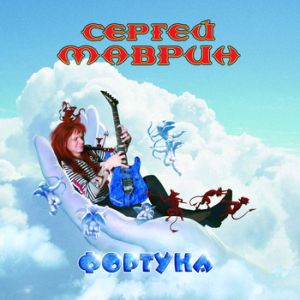
I listened to this disc twice. The first time, I concentrated on the music, critically examining every aspect — the material, the technique, the recording, the compositional subtleties. The second time, I was immersed in work and my higher brain activity was focused on problems very far removed from SERGEY MAVRIN and his art. The impressions turned out to be so polar opposite that it's hard to even imagine. While on the first listen, disc one of the album made a rather negative impression and the second seemed interesting, the second time around everything was exactly the reverse — I barely remembered disc two, while the first one really clicked. However, there was a curious peculiarity: disc one already felt painfully familiar. Indeed, one can endlessly nitpick this album, faulting it for simplicity, primitiveness, and so on. But sometimes you need to express your emotions in simple language, and that is apparently the path SERGEY MAVRIN chose. You don't argue with a winner — his solos are memorable, and if you don't fully concentrate on the music, the album goes down a treat. You don't notice that the compositions are generally drawn out, that the same motifs repeat an enormous number of times, that there aren't really that many new ideas, and that the borrowings from classical music are too straightforward. Essentially, that's exactly how this album should be listened to. It may not carry much intrinsic musical value on its own — it's no Vai or Satriani solo record — but the material sticks in your head and settles in your memory, and in a completely unobtrusive way. The second disc will be of interest to any fan of Mavrin's work: it contains compositions from various years (1994–2004), unrelated to the first part of the album or to each other. In conclusion, there is a 10-minute excerpt from a 2003 broadcast of the "Iron Curtain" radio show.