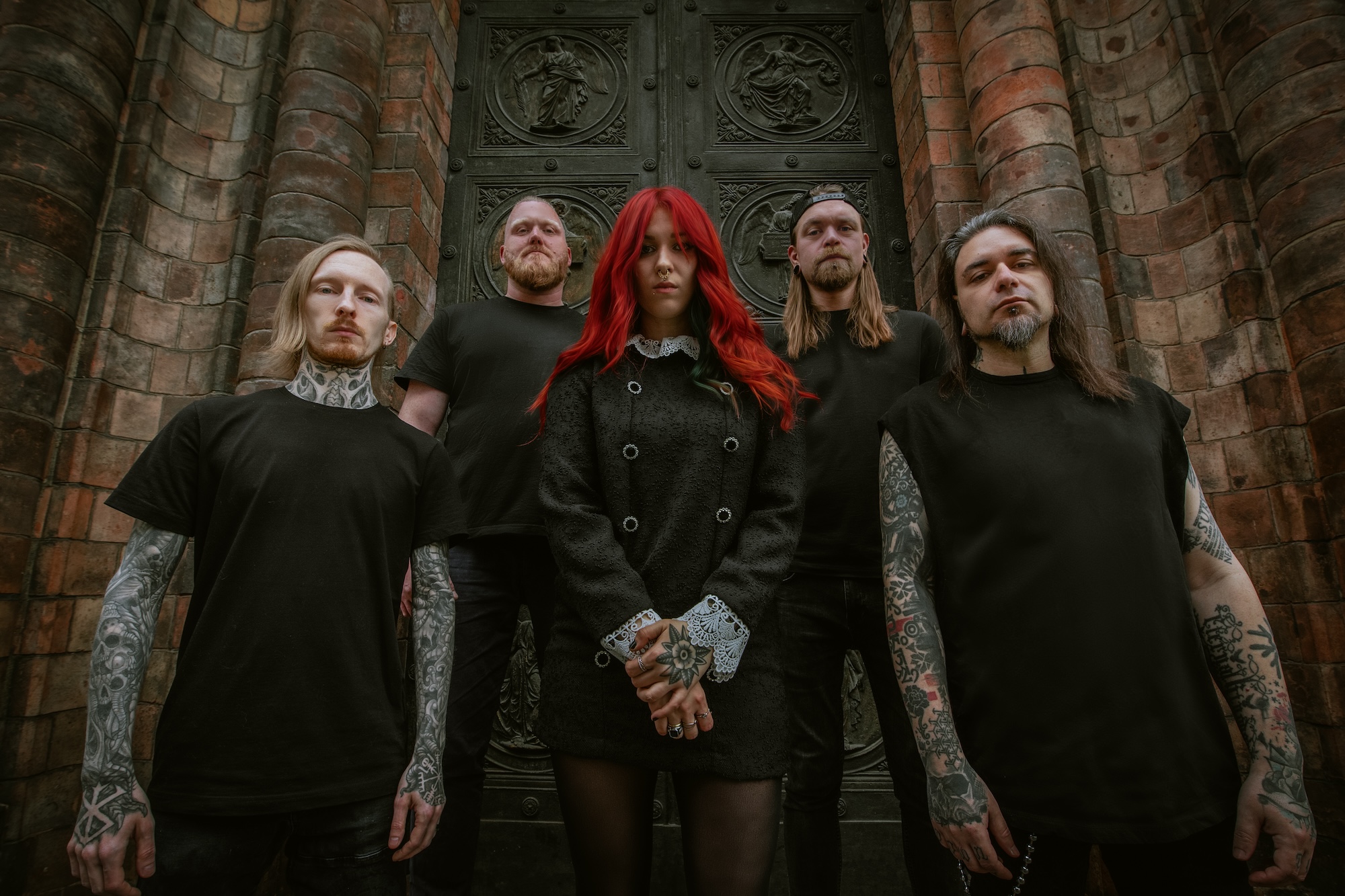
Scorpio: The name UNVERKALT sounds German, but it's actually a made-up word. Where did it come from?
Themis: First of all, hi, and thank you for the invitation. The name is a mix of languages and a mix of words.
Dimitra: We were searching for something totally unique, something different. Back in 2019 we combined two languages — I think one of them was Icelandic. We were searching words like kalt and putting random pieces together that fit nicely graphically. That's how it came out. We say the meaning is "all that is left is cold" — but of course it's a made-up meaning and a made-up word in general. [laughs]
S: You picked the name in Athens, before the move to Berlin. Was it foreshadowing Germany?
T: Exactly. [laughs]
D: We started the project around 2017, experimenting. It took a long time to take shape, and once we had some demos and a sense of direction, we started searching for a name. In 2021 we came to Berlin.
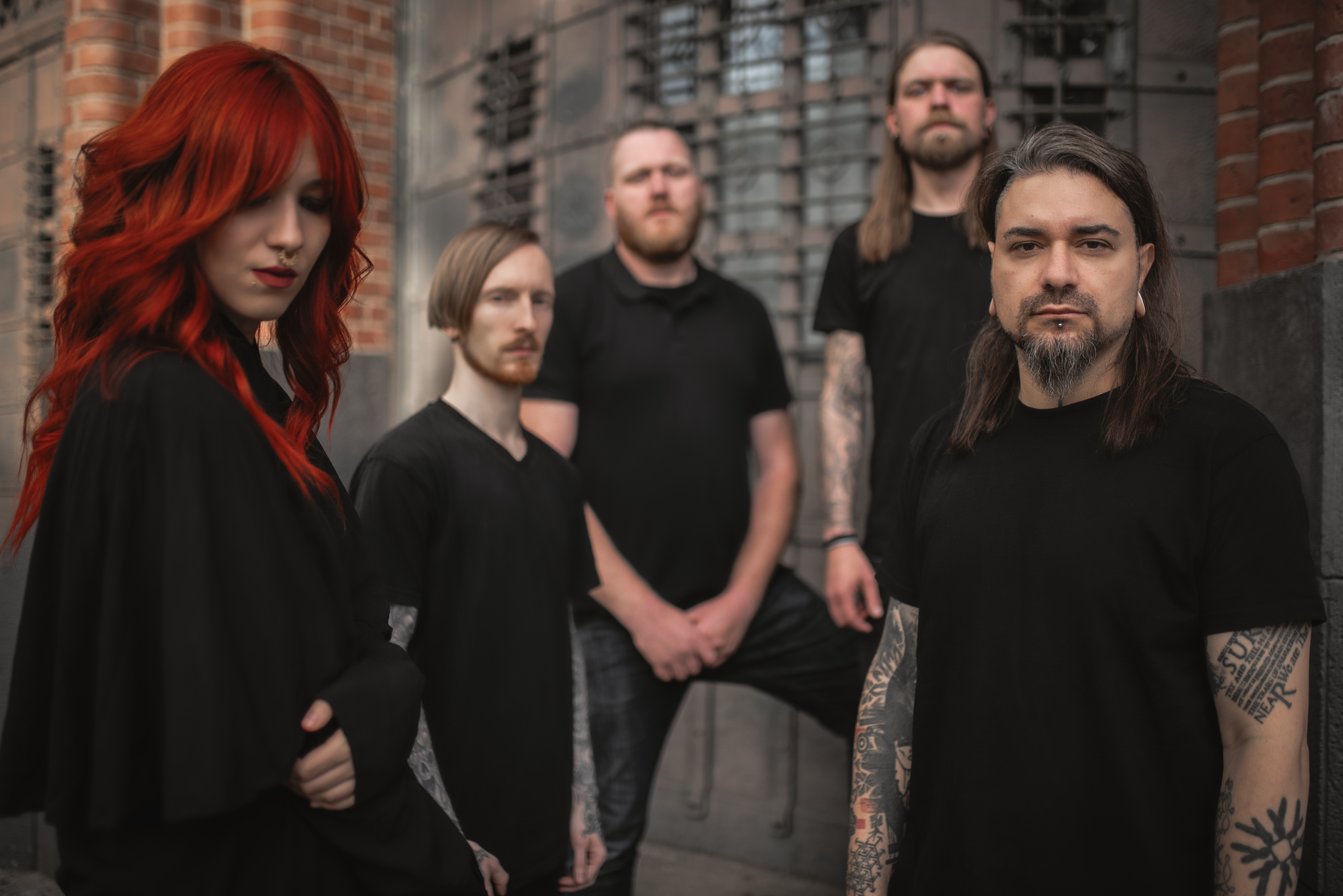
T: We left Athens for various reasons, but mostly to push the music side harder. It was a long journey, but a nice one. We're happy we're here. With a new team, with new members, it's stronger. In a place like Germany you have more space for your music. Sometimes things are easier — in that sense.
S: Do you feel that, percentage-wise, there are more metalheads in Germany than in Greece? In Ukraine and the US, metal is definitely not a mainstream genre.
T: To be honest, in Berlin specifically, metal is not at the top of the list either. But in general, in Germany — yes. They have one of the biggest scenes in Europe, maybe in the world. And in Greece I want to note this too: we have a very big metal scene. Huge, very famous bands — SEPTICFLESH, ROTTING CHRIST, SUICIDE ANGELS. Lots of bands there. But Germany, I think, is the core of Europe in metal. It's easier for bands to get out there, to become a bit more known, to work with the countries around. We're in the middle of Europe, so we can tour by bus, no airports, no nothing. That's one plus.
S: Tell us about your creative process. Themis, you're the main composer; Dimitra, you take care of the lyrics. What comes first — lyrics or music? And how has that changed across the three albums?
T: First of all, I gather all my depression in one box. [laughs] I start to record random stuff. I have my phone in my pocket all the time, and I record noises and melodies. I try to compose the main demo, and then I give the rest to Dimitra so she can write the lyrics, combine them with melodies and her voice. And then everyone else participates — they make it more avant-garde, more progressive, they add different elements. That has been the process from day one. Now it's easier for me, because all the members have their own opinions and influences and inspirations. They give me more inspiration while I'm finalising the demo. They make the process easier. That's the main core of it.
D: What changed over the years is that on the previous records, it was mostly me and Themis doing the arrangement and everything. Now, as Themis said, it's easier because there are different perspectives, different elements — they're more prominent now because of the people we have. It makes the music more diverse, more open in terms of influences. That's what changed the most. And of course, our artistic evolution in general — how you want to keep going as an artist.
S: Grief, human grief, runs through all your albums. Do you see them as a trilogy?
T: I think Dimitra is the right person to answer that. From my perspective, from the music side, it's a way to somewhere else. We had the first step on the first album, and I've been testing through the years to bring it to the form it has now. So it's a combination of years, of experiences around me — I was waiting for the right time. From my perspective, all the albums share one form. But in the end, you get something else in the final record. If you listen to them all together, you understand they're from UNVERKALT.
D: In terms of concept, lyrically, I've always been fascinated by themes that are harder to speak about. Topics about isolation, human suffering in general. The first album, lyrically, had a more abstract approach. There were a lot of topics about the world and how we behave in it. The huge progress with the third album was that we wanted something more conceptual. We tried to bring the whole concept to life. Of course we had a lot of personal experiences — but we also wanted to bring a broader meaning about the situation in the world right now, and how we're affected by so many things. Isolation, pain, all these themes — we include them.
T: All the real things we have in the world right now — as we had, and will have, forever — all the suffering, all the war. We try to combine it all into our music, to give meaning to our notes, our lyrics, everything.
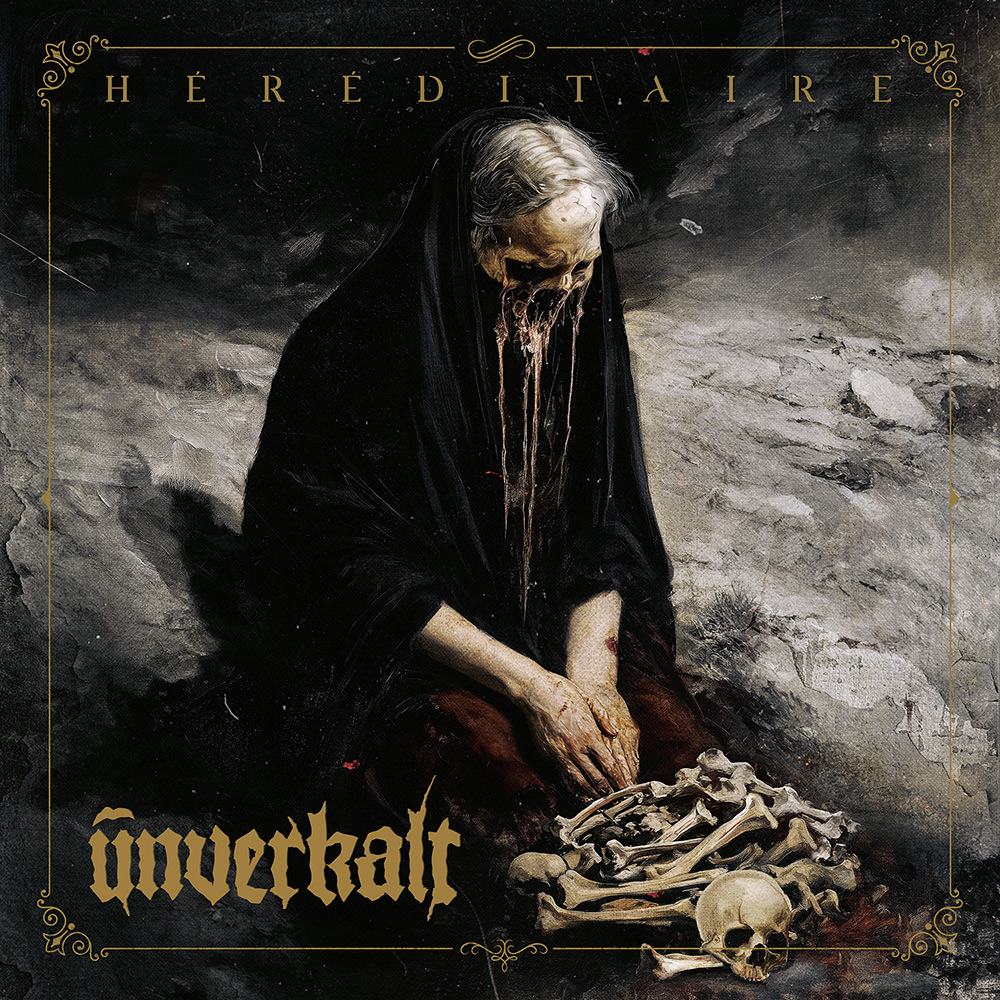
S: On this album, the topics are less abstract. One track has a personal family connection — the one with the Greek title. Themis, can you talk about it?
T: This song, and actually the artwork of the album, are one theme. I started the artwork at the same time I started recording the song. It's a story from my grandmother. Many people know about the Burning of Smyrna in 1922 — a lot of people died in that fire. It was one of the biggest events of its time. I got this story from my grandmother, and because I've carried it inside me for many years, I tried to find a way to put it into music — to fit the story inside the song and inside the cover. It was difficult. I'd been searching for this song for years, since the first record honestly, but I couldn't find the right musical approach because it was a real story. It is a real story, and it helps me a lot. I think now was the right time, on this album. Having the artwork and the music together makes me very happy — it has a lot of meaning for me.
S: The artwork is yours, and you also direct the videos. How does it feel to keep the entire creative chain inside the band?
T: It's nice. We have our day jobs, and we try to escape from those lives and find some kind of outlet. For me, the outlet is music, the videos, the cover art. It's an escape from routine. I'm happy I can create things for my band, and I'm happy I have help right now — because if you try to do it all by yourself, in the end you'll break. You need a lot of help, and this time it came from my band. They did it all together. It's a lot of process to make a video, a lot of time. It's good to have the opportunity to put what you have in your mind into a video — visually. That's one of the best things.
D: It's a big process, because Themis carries a lot of responsibility for the creative direction. We did a lot together for the shoots and the arrangements. We're very lucky that Themis can really go in the direction he wants — it's not the same to bring in an external person to do what's in your head as it is to do it yourself and bring your vision to life.
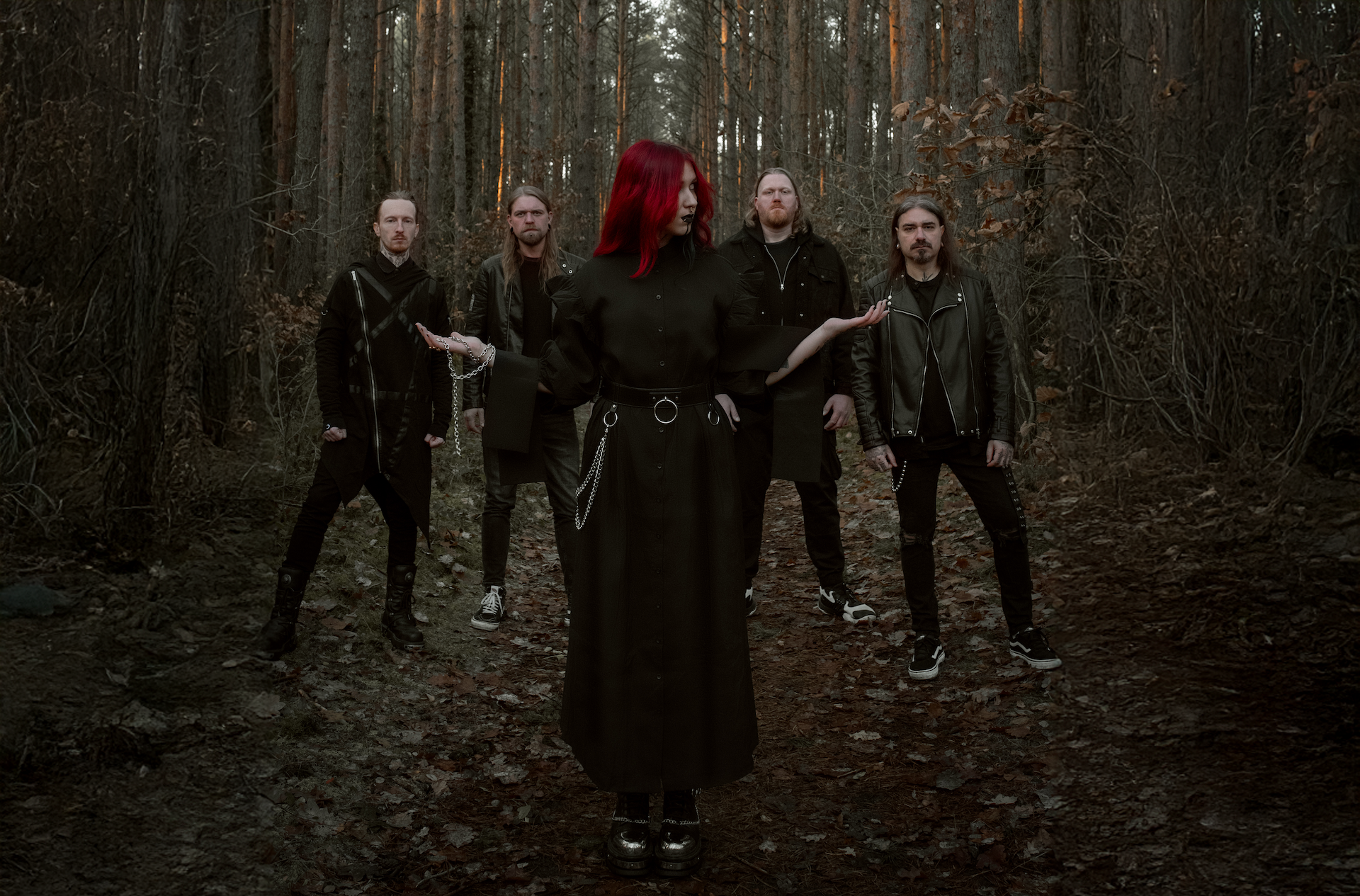
We also had a lot of help from friends, especially on the "Oath ov Prometheus" video, in Eisenhüttenstadt. Christian, our drummer, arranged the whole setup with his friends. We managed to shoot in a forest the whole day. It was such a great experience.
T: It rained all day. All day. For some reason, in Germany. [laughs] It always rains here.
S: The track names move between French, German, Greek and English. How do you decide which language fits which song?
D: Honestly, I really like French personally — how it looks, how it sounds. I have a bit of a love affair with French, so I used it on the first record too. I tried to put some elements in the second record as well, so it's become something like a ritual. [laughs] On this record I wanted to include other elements too. So I asked Yoshi, our bassist, how we could name something in German that's super bold. He came up with Auslöschung, which means "extinction" — the most ultimately horrible word. I was like, "Okay, we definitely keep it." I love how it looks, how it sounds, and especially how it gives that boldness we wanted for that song.
We're pretty free with using different languages. I don't know what'll happen in the future — maybe we'll use even more. If something looks and sounds the way we want, we keep it. And the Greek title — it's written like the name is in Greek, but not exactly correctly. We wanted a Greek name and we reformulated the word a bit, so it appears as something else. We really love exploring different words, different languages, and bringing this diverse texture into the record.
S: The new album definitely goes more extreme. There's a lot of tremolo picking, blast beats, and Dimitra, you experimented with screams. How did that go for you? I know it can damage your voice if it's not done correctly.
D: Themis was recording the first material, and it was very bold. I was like, "I want to express something different here." And Themis was telling me, "You should really experiment. You should go for this road. Just go for it." I'd wanted to bring that extremity all the way back from the first record — on "The Boundary", on the first album, there's a slight point where I do some screams, but they're so far back in the mix because I wasn't satisfied at the time. I kept them because I wanted them to somehow be there.
So it had always been in me, but I needed a little push from the music — and from myself — to go down this new road. It was a good journey. At the start, you don't know what you're doing. I have a coach for these vocals, to understand how to bring them out even more powerfully for live shows, because it's a different technique. I try to stick to my coaching plan so I don't harm my voice, to be careful. But it was so natural and I really loved that we took this direction.
T: I was waiting for the right moment for this, and the right moment was now. So I told her: "Do it." [laughs] I have a lot of influence from my background — black metal, death metal, that kind of thing. When I found these guys, I told myself: "Yes, it's time." And [laughs] that's it. We have it now. I'm looking forward to the next album being more and more aggressive.
D: And we have Eli's vocals as well, in more of a death metal approach. So we have these different textures we wanted to play with on the record. I'm really happy we explored these new territories. It's the first time, and I felt this record was the most complete record we've built so far.
S: If I'm not mistaken, you've also cited Björk as a vocal influence.
D: Yeah, definitely. I love her. And FEVER RAY.
S: Me too.
D: Those two are some of my biggest influences. I have plenty of artists I love, of course, but Björk is one of the best out there.
S: Themis, you mentioned ROTTING CHRIST — definitely a huge, very well-known Greek metal band. On this album, you collaborated with their mastermind, Sakis Tolis. How did that come about? Did Sakis approach you, or the other way around?
T: The Greek scene is big, but at the same time it's small. Everyone knows each other. I was in the Greek scene for many years and had a lot of bands, so I knew Sakis from years before. We had the chance to play together at a festival once, and I met him there. It was random. I asked him: "Okay, we have this record. Do you want to participate?" He said, "Yes, why not?" I sent him the track, we kept emailing back and forth. It was one of the easiest collaborations of my life. He liked the album before — he listened to it, and it was very easy for him to add his voice, because he's a very easy person in general. Very humble, very down to earth. It was very easy to make a video clip together too. He came here, appeared at our place for some reason, [laughs] stayed with us, and we made the video.
I have to express myself about this guy. He's one of the heroes out there. He's all the time on the road, he never stops being around. It's one of the most difficult jobs in the world right now — many hours, many days, many months on one bus. It's harsh. Very harsh. And this guy has done it for, I don't know, 30, 35 years in a row. He never stops. And he came here, for us, to make this video. Imagine what kind of person that is. We're very lucky. We've appreciated him from the beginning, not from now.
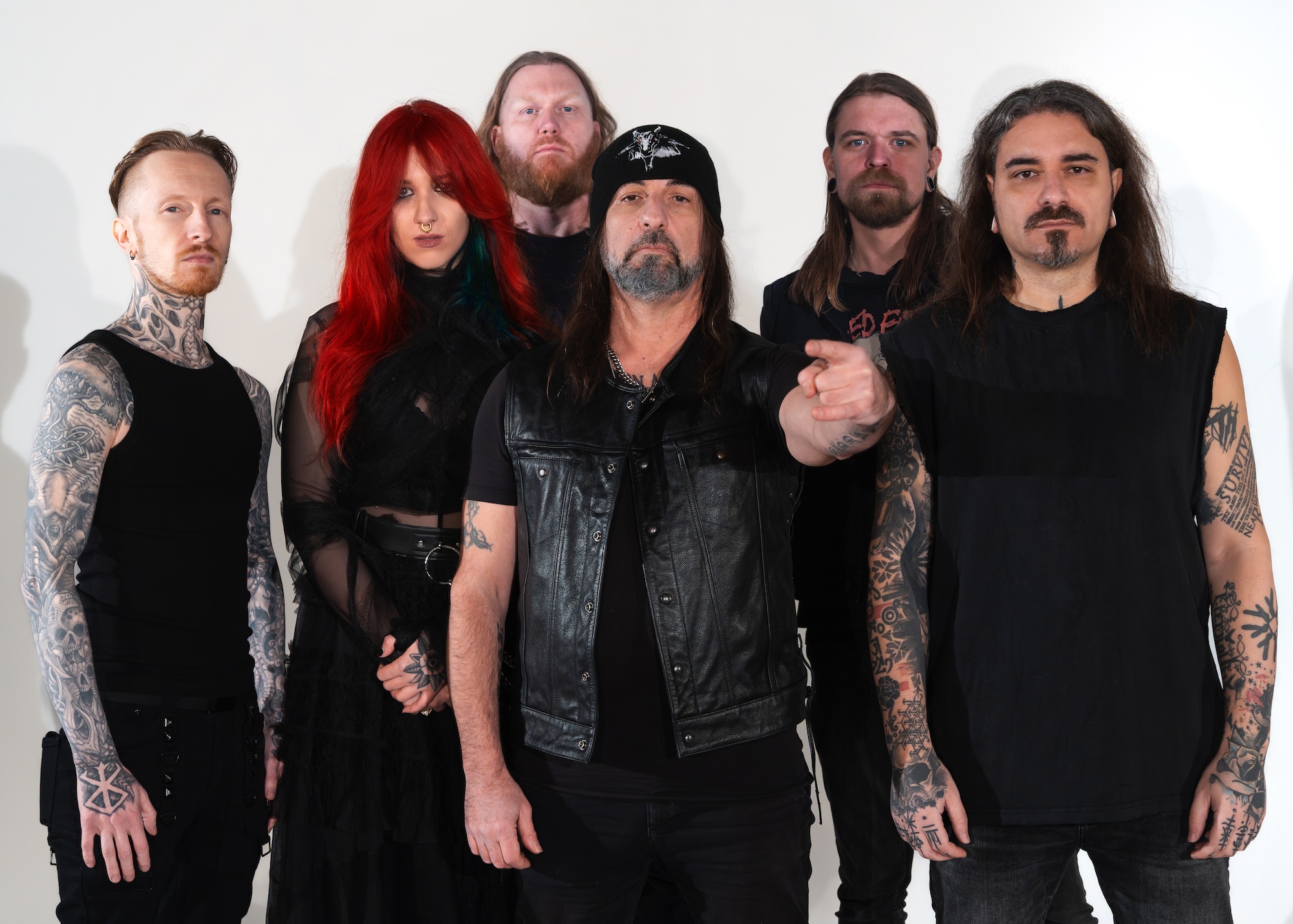
D: On this specific track, we collaborated with Yoshi, our bassist, for the lyrical aspect. And then Sakis brought his bold presence and gave this result that we were like: "Oh my God, I love this." I couldn't believe it. I still can't believe we had this chance. Really appreciate it.
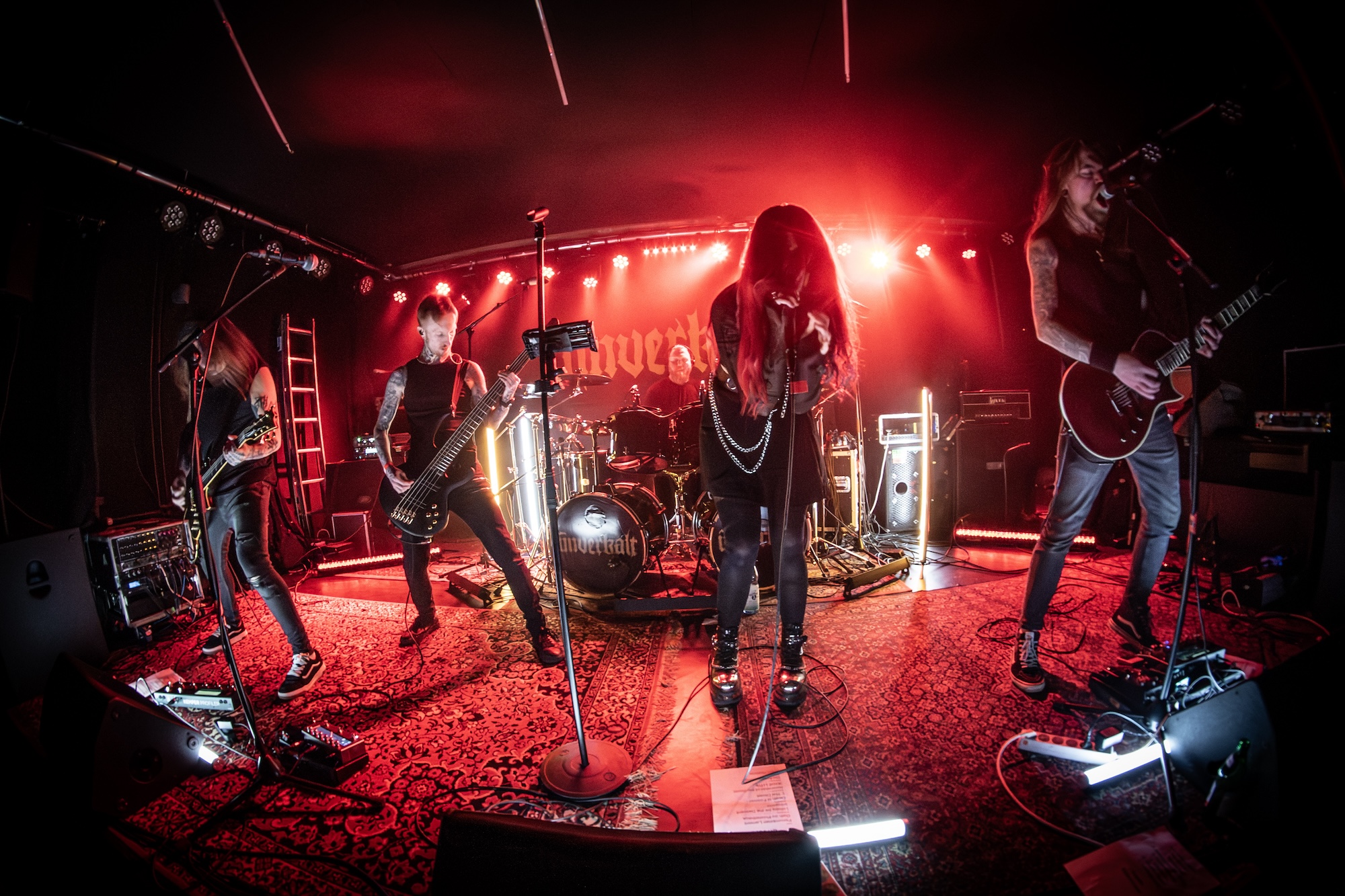
S: Recently — about a week ago — you played your Berlin album release show. How does the music translate from record to stage?
D: I love this aspect. The live show is the best thing, because you can bring all the emotion and see the impact on the audience immediately. You can see if they feel it. We approach it in a way that, of course, brings out the atmosphere — which is dark, slow-burning. It doesn't differ much from the record because we try to keep it as close as possible, and add some extra elements wherever needed. But I want to think about it like a performance of awareness — you're bringing topics that are really hurtful, you want to pass through that feeling, and have people think about it afterwards.
T: Exactly. It was a test for me — for the music, for the new tracks. The songs are very difficult to play live. It's also very difficult for Dimitra, because she keeps switching between harsh and clean vocals, and we blend in some other vocals live too. There are backing tracks; we work a lot with engineers. So it was a test, and the test was very good. Bringing it to life after you have it on the recordings, when you haven't really shared it with the people in front of you — that was really special.
S: Dimitra, what's it like switching back and forth between screaming and clean vocals?
D: It is challenging, and that's why you have to work all the time on your voice and on the balance. Recording at your own pace is one thing — you have your space, your calmness. But live, it's a different warm-up, a different way to approach it. So I really try to stick to my routine. I have such support from my vocal coach. I love her so much, [laughs] because she's helped me so much these past years. You're always afraid of doing things, of reaching what you want to reach as an artist, and she's very helpful at reaching it in a safe way.
S: On the record you also have some traditional Greek instruments. Do you play those live, or are they on backing tracks?
T: [laughs] We'd need five more people to play that thing. We hope we're enough at five right now. We'll see in the future if we have some space on stage. But yes, it's backing tracks at the moment. It's difficult to take this music on stage with real musicians — you'd need to be 10 or 20 people on stage all the time. The main goal — and my dream — is to play it live with those instruments, or with the people. Maybe in Greece. We can call some friends; I have friends who play traditional instruments. Maybe we invite them and do the show with them.
D: That would be super special. It's good that you brought it up.
S: You mentioned talking to people who came to the album show. What emotions did they have afterwards? Catharsis, recognition, discomfort?
D: I'm not sure, because I didn't really have those conversations — what you felt, et cetera. But sometimes I feel they look very still during the show. So I think it brings them into a kind of reflection. There was one moment that was actually very cool. Some months before the record release, we played a show with the old material — a different direction. One guy came up to me and said: "I felt emotional." I kept that word, because it was really beautiful to hear. Of course everyone reacts differently. Some people might like what you do, some people might not. But it's really precious when you hear something nice about how they felt.
T: I saw many faces getting emotional, because when I play live, my eyes go straight down to the people, looking right at them. I felt this depression from the music, this emotional weight. I had small chats with some fans who were taking it really deep. They told me, "It sounds like the real CD." So it was a success. Because I'm watching the people from the stage all the time, I felt that they felt the same with me when I was playing the songs. I check it constantly, to be honest. [laughs] I want to see faces. I want to see faces crying.
D: Oh my goodness. [laughs] But yes, sometimes it's a bit stressful for me too — your brain is playing games at this point. You're like, "Oh my God, is it now? Is the show going well?" So sometimes I try to focus on how I want to express it and stay there. It's really cool when you receive any kind of response, whatever it is.
S: This was your first album on SEASON OF MIST. What did the new label give you?
T: First of all, we earn people like you — interviews from all around the world. That's the best thing for me: meeting people, talking about our music, spreading it. It's very easy with SEASON OF MIST because they did very good work and helped with the promotion. It was also my goal to be on SEASON OF MIST, because I thought from the beginning that our music could fit there. They help every day. They spread our music, find interviews like today, push for reviews, promote the music as best they can.
For me, it's one of the biggest labels from my perspective. I'm super lucky we're here. And the team is something I have to mention — the exact people we're working with right now. It's like a family. It's like friends since day one. We chat all the time, day and night. They help us a lot.
D: The people inside are super nice, super dedicated. Passionate about music, doing whatever they can to make it work and help you out. Especially in this industry, which is so hard. As an underground band, on your first steps, on your first records, it's a huge help to have someone who really believes in what you do and gives you a push. It's really precious. I don't say you can't do it on your own — many underground bands are amazing at what they do — but it's also really beautiful when you have another hand to hold and to go on this journey together.
S: What are your touring plans for the rest of the year?
T: We're in negotiation with one of the very good booking agencies — Flaming Arts. We're talking about the end of 2026, and of course 2027 for the festivals, because festivals are booked a year in advance. We have three or four more shows here in Germany, and we're talking about some shows around Europe. Let's see. I don't want to say more right now.
S: It would be great to see you maybe even come to the States.
D: We would love that. We'd really love it.
T: It's totally difficult right now, the States, as I hear from Sakis — to get a visa to play live in the US. We talk to Sakis all the time, and he told me it's very difficult to play in the US at the moment. You never know.
D: We'll keep our fingers crossed.
S: In one of your earlier interviews, Dimitra, you compared your music to risotto — to a dish. So if you think about Héréditaire, what dish would it be?
D: What? I didn't know that. [laughs] Oh my God, that was an amazing question. I think it's something you can't really eat. I don't know. I need to think about it — like something in the oven. [laughs] You can't eat it. You just watch it and you can't really…
S: Why? Because it's disgusting?
D: I don't know. It's a lot of layers.
T: Too precious.
D: Maybe it smells weird. [laughs] I really don't know, guys. It's hard to think about. Maybe moussaka with something weird —
T: With cheese. [laughs]
D: [laughs] Pineapple. Again, the pineapple. But yeah, something you don't really eat. Something weird. I'll think about it and come back to you. I think it's something dark in colour, a bit burned.
T: Or pink.
D: [laughs] Yeah. But definitely not a vibrant colour.
S: Thank you so much for your time today.
D: Thank you so much for having us. We're very happy to be here.
T: Wish you all the best. I'm jealous you're in the US, to be honest. [laughs] A bit. It's one of my goals to be there. Thank you so much for the honour.
D: Hopefully you'll come here on tour, and more fans will be exposed to your music.
Thanks to Will Yarbrough at Season of Mist for arranging this interview.
Video version of the interview: